Why the Local Church Matters

When Jesus gathered His disciples in the region of Caesarea Philippi and asked, “Who do you say that I am?”, He was doing far more than prompting a theological discussion. In that moment, recorded in Matthew 16:13–20, Jesus revealed the foundation of something entirely new—the church. This passage contains the very first use of the word ekklesia, meaning “a called‑out assembly,” and it sets the stage for how believers are meant to live out their faith. You cannot understand fellowship, baptism, or Christian community without understanding the church. These practices are not free‑floating spiritual activities; they are rooted in the life of a local body of believers who gather, worship, and grow together.
The church is not a vague spiritual idea or a loose network of Christians. As Mack Stiles notes, the church is the God‑ordained local assembly of believers who commit themselves to one another. They gather regularly, teach the Word, celebrate communion and baptism, practice discipline, establish biblical leadership, pray, and give together. The church may do more than this, but it is never less. Jesus Himself makes this clear when He says, “I will build my church.” The church belongs to Him. Scripture describes it as both the Body of Christ and the Bride of Christ—two images that show how deeply Jesus identifies with His people. As the Body, we are joined to Him as our Head, each member playing a vital role. As the Bride, we are loved, cherished, and sanctified by Christ, who gave Himself for us. These images are inseparable; you cannot love Jesus and reject His church any more than you can love a groom while despising his bride.
Jesus not only owns the church—He builds it. In Acts 2, we see Him adding to the church daily as people hear the gospel, believe, and are baptized. Baptism is not merely a personal milestone; it is the doorway into the life of the church. New believers were immediately folded into teaching, fellowship, communion, and prayer. The Christian life was never designed to be lived in isolation. From the very beginning, Jesus has been gathering a people, shaping them into a community that reflects His character and carries His mission.
Jesus also builds His church on the right foundation. When He says, “On this rock I will build my church,” He is pointing to Himself and to the confession that He is the Christ, the Son of the living God. The church is built on Christ the Cornerstone and on the teaching of the apostles and prophets. Anything built on personality, preference, or performance will eventually crumble. But a church built on Christ will stand firm, growing into a holy temple in the Lord, a dwelling place for God by the Spirit.
And Jesus gives His church a purpose. He declares that “the gates of Hell will not prevail,” a statement that pictures the church not as a defensive fortress but as an advancing force. Gates are defensive structures; they do not attack. Jesus is telling us that His church is meant to push back the darkness with the light of the gospel. He gives His people the “keys of the kingdom,” entrusting them with the message that opens the door to eternal life. This mission echoes the Great Commission, where Jesus sends His followers to make disciples, baptize, and teach in His authority and presence.
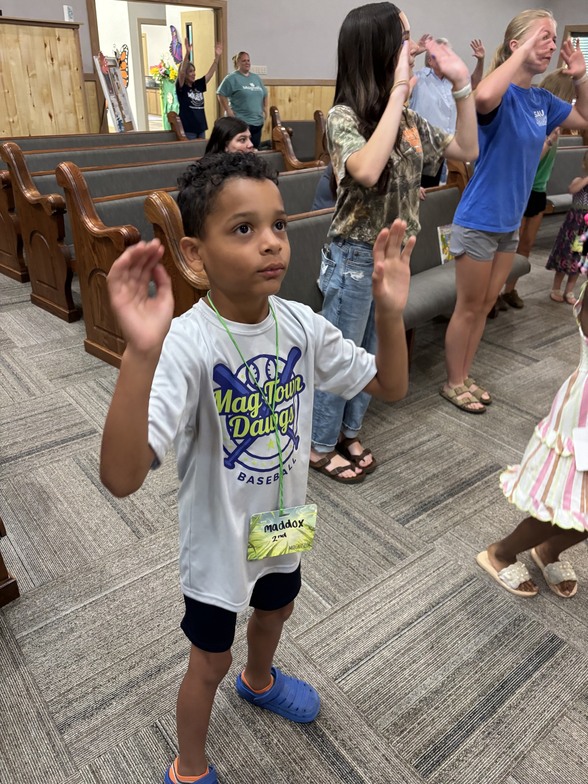
All of this reminds us why the local church matters so deeply. In a world that is increasingly transient and disconnected, the church offers something you cannot find anywhere else. It offers permanence—a family of believers who stay, who walk with you through seasons of joy and sorrow. It offers older believers—men and women who have walked the road ahead of you and can offer wisdom, perspective, and encouragement. And it offers children—the next generation who remind us of where we came from and why faithfulness matters.
Jesus didn’t just save individuals; He formed a people. He didn’t just call us to believe; He called us to belong. The local church is His idea, His design, His bride, His body, and His mission in the world. If you are a follower of Christ, you need a church family—and the church needs you.